
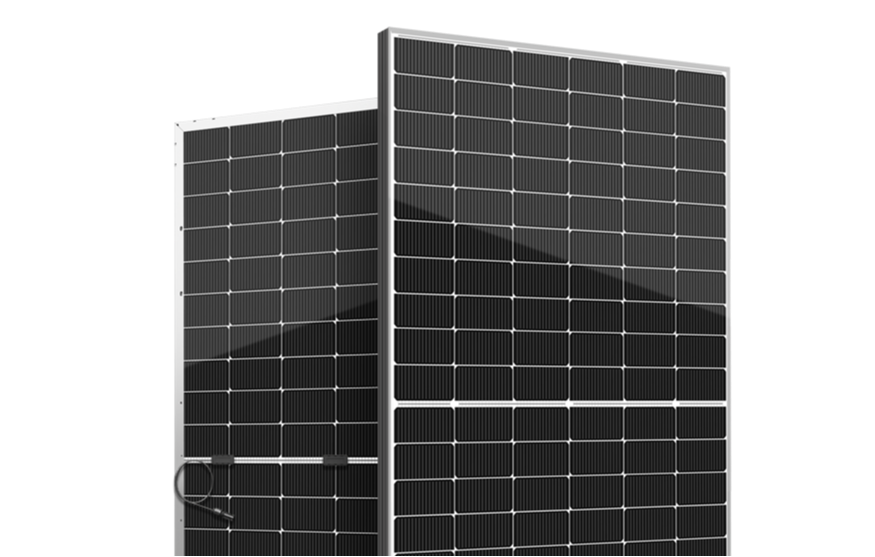
495W SEG Solar Yukon N Series Bifacial Solar Panel
Product Description:
Product highlights:
- Half-Cell N-Type Bifacial Module — Higher sensitivity on front & backside, 480W-495W Power Output Range, Heavy Snow and Wind Load. High Power Output; 182 N-Type Cells; Half Cut Technology; Efficiency up to 22.87%; Power range 480 – 495W; Super multi busbar technology; Bifaciality is as high as 85%.
- Higher Bifacial Gain — N-Type cells have a bifacial rate of up to 85%, which is 15% higher than PERC, allowing the power of YUKON N bifacial module to be increased to 640 Wp.
- Leading In Efficiency — SEG YUKON N series uses 182 half-cut N-Type solar cells with cell efficiency of over 25.0%, resulting in an excellent temperature coefficient. Additionally, nearly zero LID/LeTID effect and outstanding outdoor low irradiation performance contribute to the value these modules bring to our customers.
- Easy to Install, Wide Applications:
- Frame design enables compatibility with standard installation methods
- Safe and easy to transport, handle, and install like normal framed modules
- Deployable for ground-mounted utility, carports, and agricultural projects
About the System
Solar power systems designed for recreational vehicles and boats to charge batteries and run onboard loads.
Product Specifications:
- Energy Type: Solar
- Suitable for: Commercial, Residential
- Specialties: Marine, RV
Have questions?
What information does RES need to design a remote power system?
Useful starting information includes your project location, what equipment needs power, expected energy use, seasonal or year-round operation, existing electrical equipment, available generators or charging sources and your priorities for backup and reliability. RES can use that information to help determine what additional site assessment or system planning is needed.
Can solar be used on a boat?
Solar can contribute to battery charging and onboard electrical needs in marine applications. The appropriate system depends on the vessel, available installation area, electrical loads, battery system and other charging sources.
Does RES provide solar and battery systems for RVs?
Yes. RES works with RV and mobile power applications. System design can account for available installation space, expected loads, battery capacity and available charging sources.
Can RES help with remote cabins?
Yes. Cabin systems can be designed around seasonal or year-round use, expected electrical loads, available renewable resources, battery storage and backup power requirements.
Can RES design power for a remote business or facility?
Yes. RES works with residential, commercial and remote applications and can evaluate renewable generation, battery storage, generator integration, electrical infrastructure, controls and ongoing support as part of a complete system.
Can an off-grid system include a generator?
Yes. Generators are commonly integrated with batteries and renewable generation in hybrid power systems. The system can be designed so each energy source supports the site’s operating requirements.
Do I need batteries for an off-grid solar system?
Most fully off-grid solar applications require some form of energy storage or another source of power for times when solar generation cannot meet the load. The appropriate battery capacity depends on energy use, desired autonomy, seasonal conditions and the overall system configuration.
Can solar work for an off-grid property in Alaska?
Solar can be part of an Alaska off-grid energy system, but system design needs to account for location, seasonal solar availability, electrical loads and the other energy sources available at the site. Battery storage and generator backup may also be incorporated depending on the application.
How does geothermal work?
A geothermal system uses underground loops and a heat pump to transfer natural heat between the earth and your building, providing highly efficient heating and cooling without generating heat.
Does RES handle permitting?
Yes, RES manages permits, inspections, and utility coordination.