
Ground Source Heat Pump
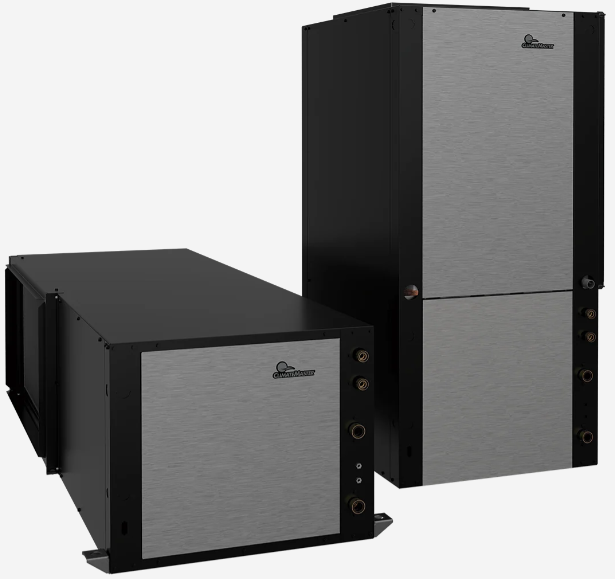
Product Description:
Ground‑source heat pump systems that use stable earth temperatures to provide efficient heating and cooling.
Includes:
- Ground Loops
- Circulation Pumps
- Heat Exchangers
- Manifolds
- Antifreeze Solutions
- Geothermal Controls/Thermostats
Your Path to Geothermal
- Initial Consultation: Tell us about your building, current heating system, and goals.
- Site Assessment & Design: Our team evaluates your property and designs the optimal system
- Detailed Proposal: We provide transparent pricing and projected energy savings.
- Place Your Deposit: Secure your installation date and equipment order.
- Ground Loop Installation: Our team installs your underground heat exchange system.
- Heat Pump Installation: We install and connect your indoor heat pump equipment.
- System Comissioning: Final testing ensures optimal performance before handover.
- Enjoy Your System: Start using Earth’s energy for efficient heating and cooling
Why Geothermal?
- 3-5x Energy Efficiency: Ground source heat pumps are among the most efficient heating systems. For every 1 watt consumed, receive 3-5 watts of heating energy.
- 50-Year Design Life: The underground loop lasts 50+ years. A onetime infrastructure upgrade that serves generations.
- Dramatically Reduce Fuel Costs: Eliminate dependence on volatile fuel prices, your heating costs become predictable and significantly lower over time.
- Reliable Year-Round Heating: Earth maintains stable temperature year-round for consistent heating even in Alaska’s coldest winters.
- Exceptionally Low Maintenance: With few moving parts and no combustion, maintenance is minimal. Annual costs are typically just $100-150.
- Summer Cooling Included: The same system cools your home in summer by reversing heat flow into the cooler ground.
Product Specifications:
- Energy Type: Geothermal
- Suitable for: Commercial, Residential
Have questions?
What information does RES need to design a remote power system?
Useful starting information includes your project location, what equipment needs power, expected energy use, seasonal or year-round operation, existing electrical equipment, available generators or charging sources and your priorities for backup and reliability. RES can use that information to help determine what additional site assessment or system planning is needed.
Can solar be used on a boat?
Solar can contribute to battery charging and onboard electrical needs in marine applications. The appropriate system depends on the vessel, available installation area, electrical loads, battery system and other charging sources.
Does RES provide solar and battery systems for RVs?
Yes. RES works with RV and mobile power applications. System design can account for available installation space, expected loads, battery capacity and available charging sources.
Can RES help with remote cabins?
Yes. Cabin systems can be designed around seasonal or year-round use, expected electrical loads, available renewable resources, battery storage and backup power requirements.
Can RES design power for a remote business or facility?
Yes. RES works with residential, commercial and remote applications and can evaluate renewable generation, battery storage, generator integration, electrical infrastructure, controls and ongoing support as part of a complete system.
Can an off-grid system include a generator?
Yes. Generators are commonly integrated with batteries and renewable generation in hybrid power systems. The system can be designed so each energy source supports the site’s operating requirements.
Do I need batteries for an off-grid solar system?
Most fully off-grid solar applications require some form of energy storage or another source of power for times when solar generation cannot meet the load. The appropriate battery capacity depends on energy use, desired autonomy, seasonal conditions and the overall system configuration.
Can solar work for an off-grid property in Alaska?
Solar can be part of an Alaska off-grid energy system, but system design needs to account for location, seasonal solar availability, electrical loads and the other energy sources available at the site. Battery storage and generator backup may also be incorporated depending on the application.
How does geothermal work?
A geothermal system uses underground loops and a heat pump to transfer natural heat between the earth and your building, providing highly efficient heating and cooling without generating heat.
Does RES handle permitting?
Yes, RES manages permits, inspections, and utility coordination.