
e230i Kestrel
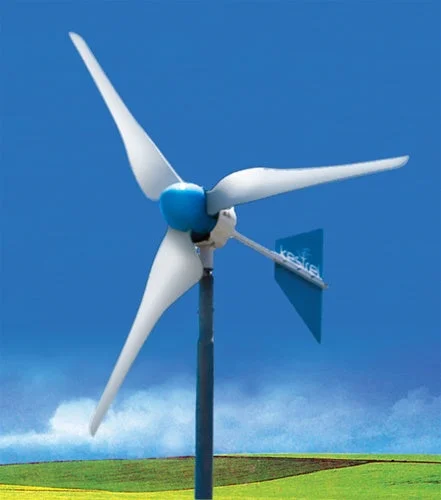
Product Description:
Wind‑powered generators that produce electricity, often used in hybrid solar‑wind systems. Kestrel wind turbines are among the best performing and most efficient wind power systems. Kestrel’s strict adherence to quality standards and continuous development of Kestrel technology has resulted in a line of high quality, quiet, powerful, and robust machines in 600, 800, 1000 and 3000 Watts rated power that are both reliable and cost effective.
All Kestrel turbines feature Full Axial Flux Discoid Technology, for high efficiency and increased energy production in lower wind areas. All models use patented pitch control, allowing blades to maintain rated output in excess wind speeds and optimizing overall power production.
Energy may be harvested at any different wind speed exceeding cut-in speed and rated output is maintained through rotor turbulence and pitch control in high winds. Energy output is intrinsically linked to your site’s wind distribution, topology and altitude as well as tower height and the height of trees or structures in the area.
Product highlights:
- 5.6 mph cut in wind speed, 28 mph rated wind speed
- The e230i uses 3 fiberglass blades with a rotor diameter of 7.54 feet
- The e230i is often used in rural installations where there is no grid tie available. Also appropriate for battery charging, grid tie or hybrid systems, the output voltage can range from 12, 24, 36, 48, 110 and 200 Vdc
- Monopole tower top mass is 99 lbs. and can use either a charge or voltage limiter
Product Specifications:
- Energy Type: Wind
- Suitable for: Commercial
Have questions?
What information does RES need to design a remote power system?
Useful starting information includes your project location, what equipment needs power, expected energy use, seasonal or year-round operation, existing electrical equipment, available generators or charging sources and your priorities for backup and reliability. RES can use that information to help determine what additional site assessment or system planning is needed.
Can solar be used on a boat?
Solar can contribute to battery charging and onboard electrical needs in marine applications. The appropriate system depends on the vessel, available installation area, electrical loads, battery system and other charging sources.
Does RES provide solar and battery systems for RVs?
Yes. RES works with RV and mobile power applications. System design can account for available installation space, expected loads, battery capacity and available charging sources.
Can RES help with remote cabins?
Yes. Cabin systems can be designed around seasonal or year-round use, expected electrical loads, available renewable resources, battery storage and backup power requirements.
Can RES design power for a remote business or facility?
Yes. RES works with residential, commercial and remote applications and can evaluate renewable generation, battery storage, generator integration, electrical infrastructure, controls and ongoing support as part of a complete system.
Can an off-grid system include a generator?
Yes. Generators are commonly integrated with batteries and renewable generation in hybrid power systems. The system can be designed so each energy source supports the site’s operating requirements.
Do I need batteries for an off-grid solar system?
Most fully off-grid solar applications require some form of energy storage or another source of power for times when solar generation cannot meet the load. The appropriate battery capacity depends on energy use, desired autonomy, seasonal conditions and the overall system configuration.
Can solar work for an off-grid property in Alaska?
Solar can be part of an Alaska off-grid energy system, but system design needs to account for location, seasonal solar availability, electrical loads and the other energy sources available at the site. Battery storage and generator backup may also be incorporated depending on the application.
How does geothermal work?
A geothermal system uses underground loops and a heat pump to transfer natural heat between the earth and your building, providing highly efficient heating and cooling without generating heat.
Does RES handle permitting?
Yes, RES manages permits, inspections, and utility coordination.